Who have you been mean to this year?
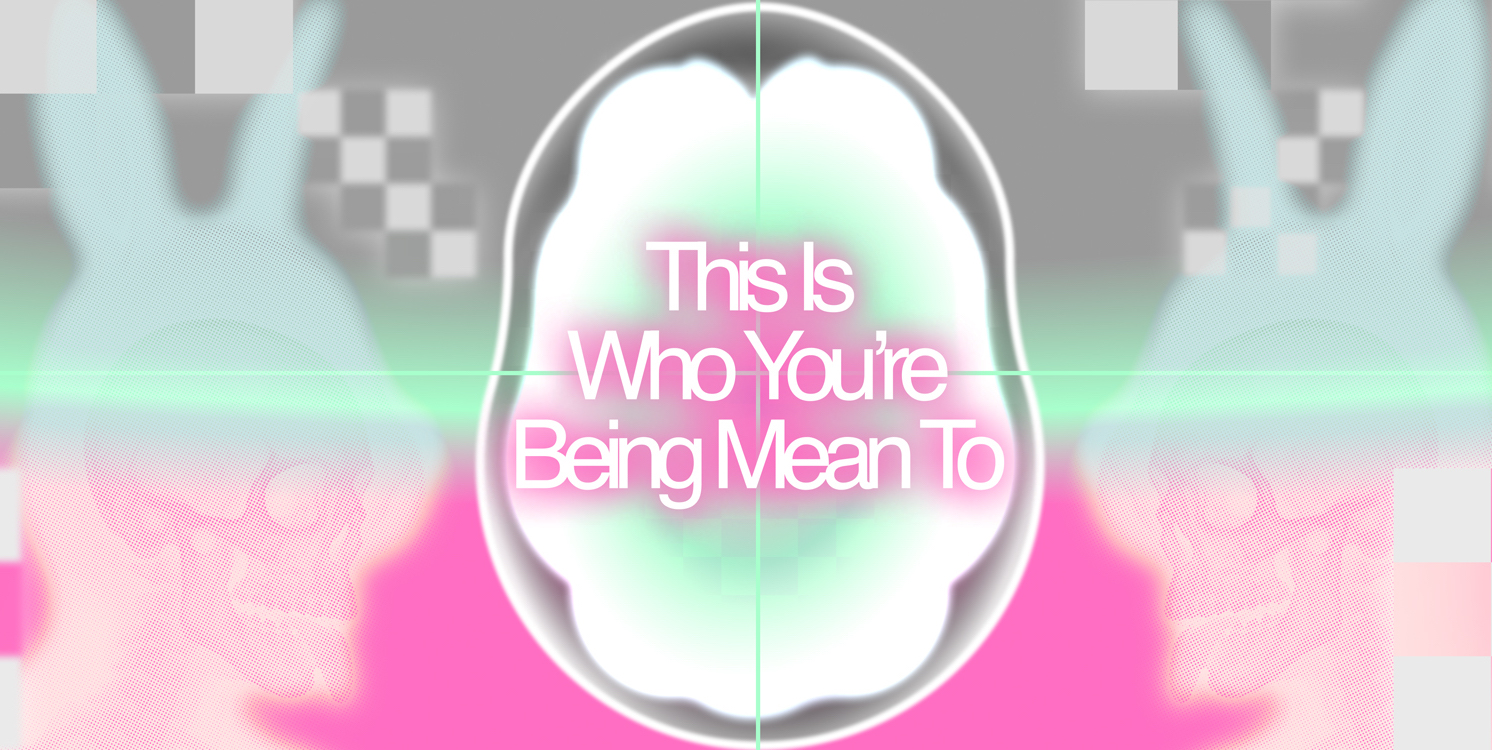
One of our motivations to focus on online gender expression this year— under the theme This is who you’re being mean to—was the observation that the early Internet is often remembered as an emancipatory space. A place where people freely experimented with identity and gender, while recent online culture can relean toward more cis-heteronormative ideals. At the beginning of the year, we asked ourselves: what do these tensions reveal about today's internet culture? A crucial part of the answer lies in recognising how algorithmic platforms designed around hypercapitalist values can shape how we present ourselves and how we act.
This also came up during our second-ever Symposihmm at the end of October, The Best Version of Yourself. One of the self-optimisation trends we examined was wellness. Fariha Róisín helped us to realise how all wellness practices—from yoga to saunas—are based on indigenous practices. Whereas wellness used to be something you had to put effort into, it is now packaged as something you can purchase. An instant fix. Fariha said: “We are no longer consumers, but want to be consumed”. Wellness—but really, how we present ourselves online in general—is often a performance. In an algorithmically influenced society, visibility itself can equate to currency. Consumability through how we look, act, or post—has become a way to gain attention, status, and even a sense of self-worth in online spaces.
Every time we interact with social media platforms like Instagram and TikTok, the personalised algorithms learn what grabs our attention. They then feed us even more of it, pushing our tastes and opinions to the extremes to keep us hooked. As a result, the spectrum of femininity and masculinity are amplified to extremes, from lip fillers for women to bulging muscles for men. Because our looks can be altered, improving them has become even more of a form of social and financial capital. Adapting one's look to suit the algorithm is a means of income and survival in an increasingly unbalanced economic landscape.
After two Symposihmms and a podcast series in which we explored different gender archetypes of gender expression, we are concluding the theme year with the publication of our online dossier. Scroll below for an overview.
In the coming months, we will be organising a four part workshop series on digital archiving in collaboration with NADD and are already working behind the scenes on a new year theme, which we will introduce to you in early 2026. You can also expect another open call from us!
For now, enjoy exploring our online dossier below. If you haven’t already, give another episode of our podcast Thinking Face Emoji a listen this winter (and let us know if you’d like us to make more!).
Wishing you a cozy end to the Gregorian year in advance,
Team The Hmm
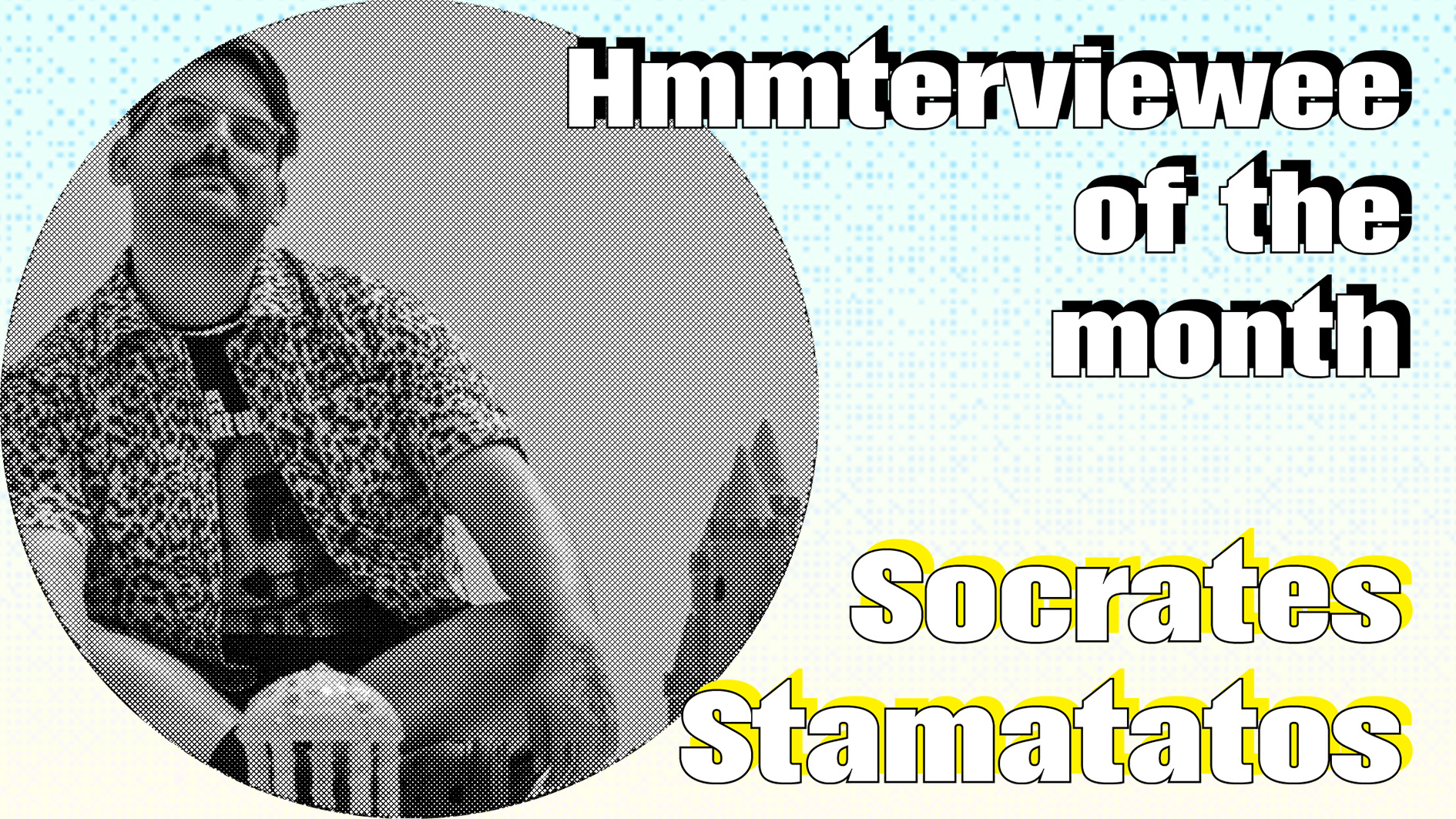
Photo credits: Domen Pal
Hmmterviewee of the Month: Socrates Stamatatos
This month's Hmmterviewee is Socrates Stamatatos, a contributor to our dossier (scroll below) for this year's theme, This is who you're being mean to. They are a Berlin-based independent curator, writer and transdisciplinary artist exploring connectivity and care through digital and community-based practices. Read below to find out more about Socrates' thoughts on the internet.
How many browser tabs do you have open right now?
- Currently I have 18 tabs open, and that’s on my active internet hoarding. I will say goodbye to each “unnecessary” one when I am ready. 🤭
What's the most ridiculous rabbit hole you've ever fallen down on the internet?
- I love a good old internet rabbit hole, maybe, because it is the only thing close to the OG internet surfing. Lately, I have been down the Christian Furry rabbit hole!
Have you ever learned a skill entirely from the internet? What was it?
- Back when I used to do drag, I have learned everything drag makeup related from the internet.
What's an online tool everyone should know about?
- The 1 ⭐ Review Tour plugin for Mozilla by the artist duo !Mediengruppe Bitnik. Makes my day when I read about people’s failed expectations on Google Maps.
What's your favourite place on the internet?
- RIP Mark Fisher, you would have loved my answer. I love the Internet Archive so I can feed my nostalgia.
Find Socrates online at their Instagram/Substack/TikTok/Bluesky/ Mastodon, @socratesstamatatos

SLOWwwww- – . .
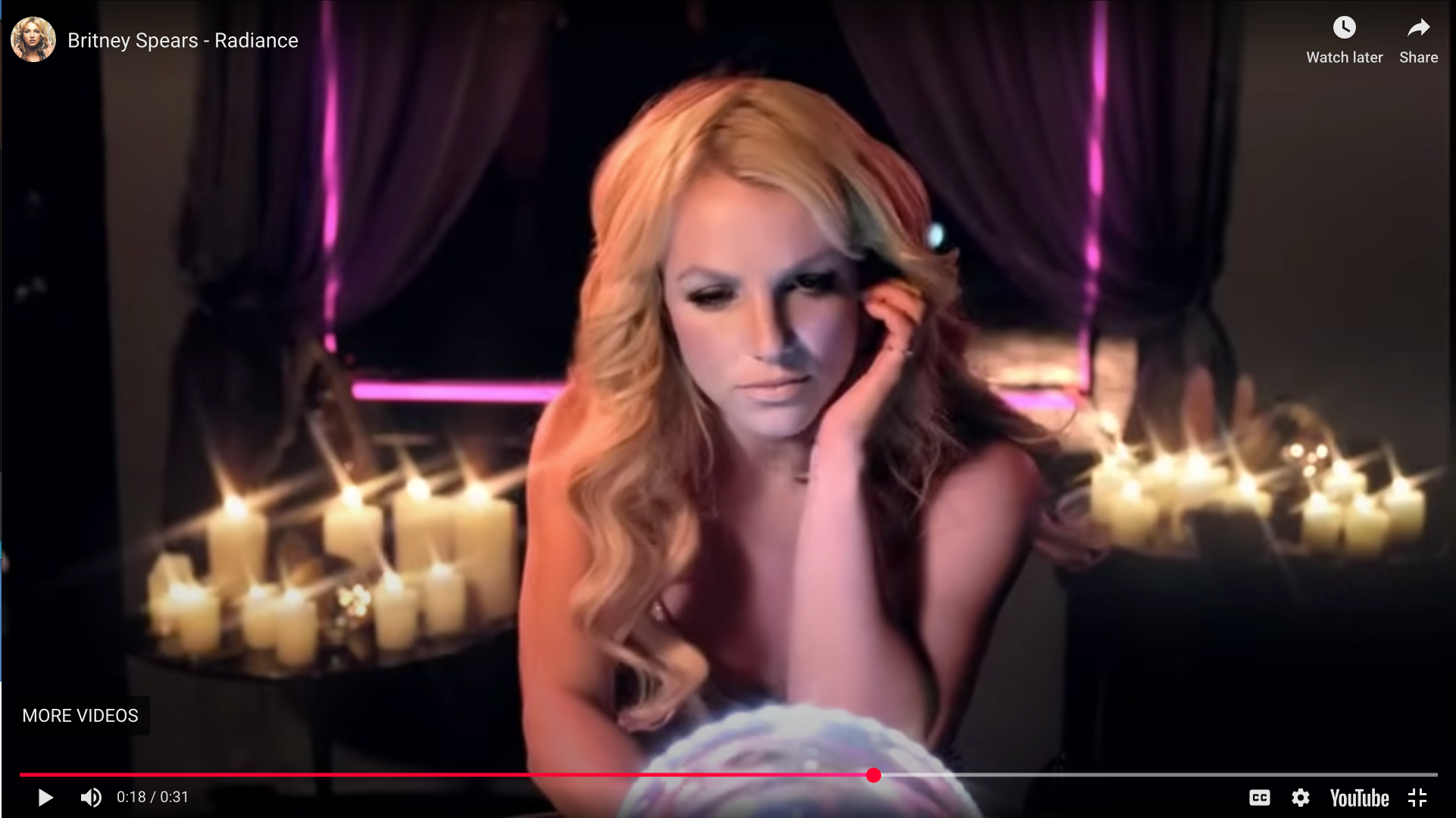
Socrates Stamatatos uses slowness as a subversive response to the elitism and exclusion embedded in accelerationist thought. Rather than citing techno-theory’s usual suspects, Socrates turns to Britney Spears as a pop-cultural oracle of resistance. Against the cold determinism of Nick Land and the contemporary transformations of pink and accelerationism, they propose a glitchy, tender theory rooted in slow girlhood. Slowness becomes a form of agency—an antidote to the algorithmic command to optimise, brand, and transcend.

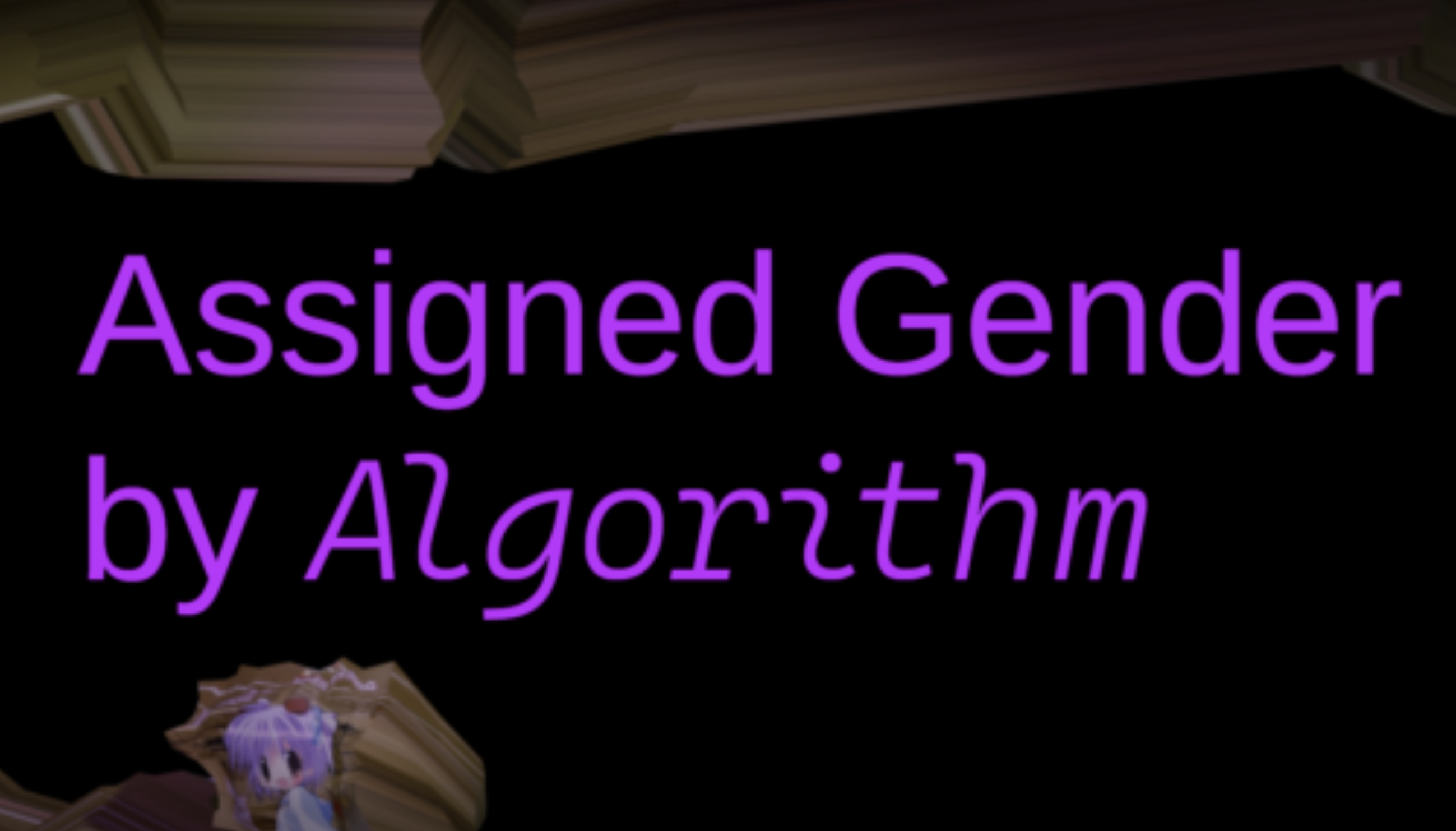
Quiz: Assigned Gender By Algorithm
Did you know Twitter has gender classification algorithms that analyse the language, vocabulary and word frequency of their users? This is one of the many insights of the Assigned Gender By Algorithm quiz. With this essay in the format of a quiz, Senka Milutinović explores how gender is mediated online and how we as users can resist and subvert where the algorithmic gaze leads our expression of it.

Bombardiro Bodies: Masculinity, Fascism, Marinetti and a Millennial Transmasc in the Age of Italian Brainrot
In this essay, writer Mel Ghidini explores how online spaces have shaped their identity, looking at masculinity and the links between Italian brainrot, genocidal fascism, concrete poetry, and Futurism from a transmasc and queer perspective.
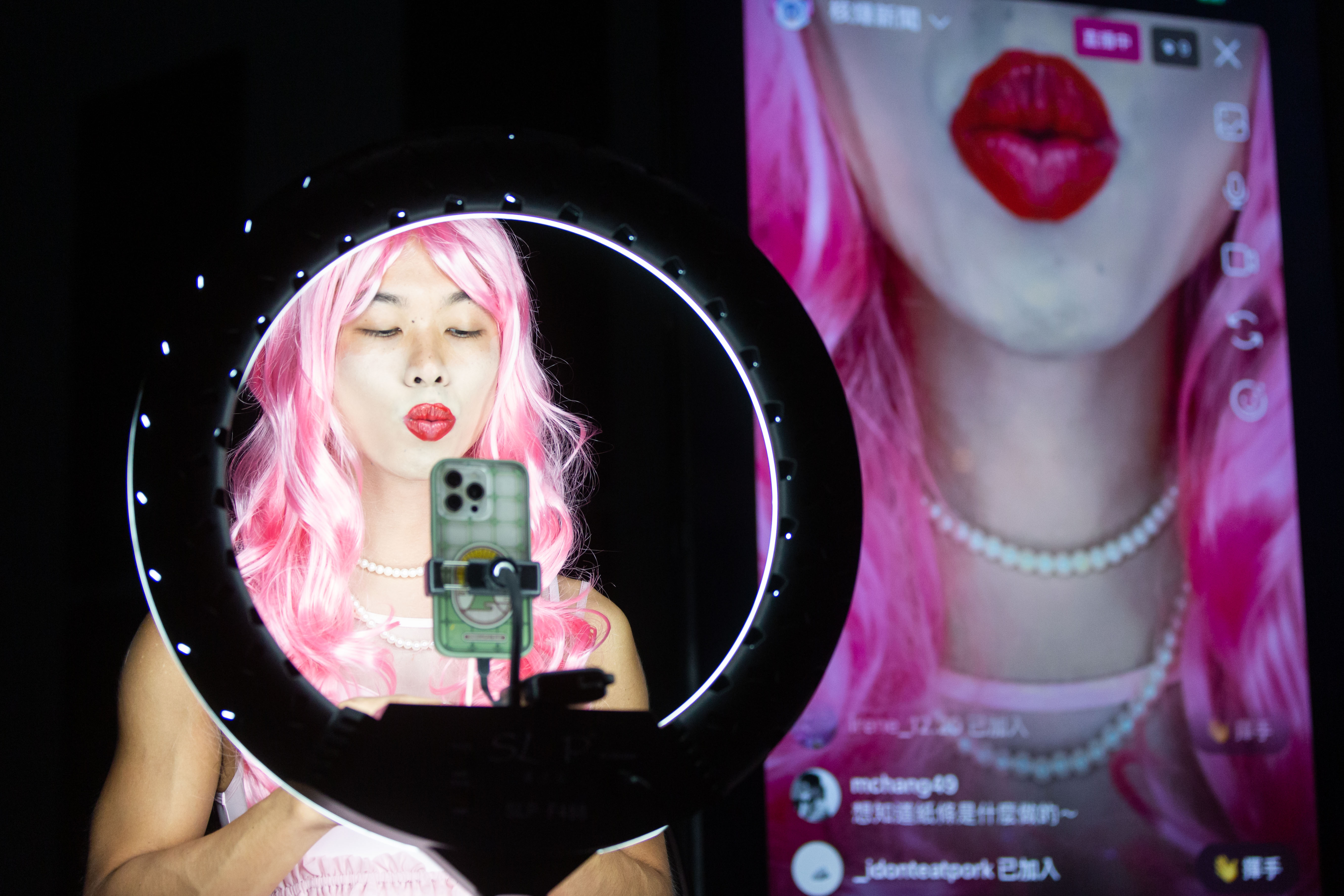
Photo credits: Team My Favorite News Goes Nuclear, provided by Taipei Fine Arts Museum
Hmmlight: My Favorite News Goes Nuclear by Team My Favorite News Goes Nuclear
About the team
Chen Wei-An (chwan1) is a freelance programmer specializing in interactive design, generative art, and exhibition systems. Tseng, Chih Wei is active as a performing artist in theatre, dance and immersive works. His practice raises public awareness on HIV/AIDS and explores queer culture. Yang, Tzu-I (Coldsheep) is an artist who creates or collaborates on video games, interactive installations, and dance theatre works to explore his reflections on dance, technology, and society. Jhen Chen, graphic designer, co-founder of Limestone Bookstore. Graduated from Design Academy Eindhoven in the Netherlands in 2016. Since 2018, engaged in a one-year residency program at the Jan van Eyck Academie in the Netherlands. Emily Hsiang-Yun Huang is a dance filmmaker and digital art curator with a background in philosophy. Her work focuses on digital intimacy and collective mourning in the framework of post-colonialism and cyberfeminism.
My Favorite News Goes Nuclear
My Favorite News Goes Nuclear is a content farm website generated through a combination of Al and human labour, along with "mukbang" (eating livestream) performances that are broadcasted on lnstagram and in the hybrid exhibition counterarchive.commons at the Taipei Fine Arts Museum. Through the lens of digital materialism and digital corporeality, the artwork explores the labour behind Al-generated dis/misinformation and content farm articles, as well as the affective labour of young Asian girls in mukbang culture. Created with the help of ChatGPT and Stable Diffusion, the website revolves around themes of "food safety", "irradiated food", and "health and wellness." It offers a deluge of eye-catching headlines and content designed to captivate and lure viewers into clicking. As the website receives more clicks, it becomes increasingly fragmented until it eventually disappears, transforming into a selfie-camera mode-an analogy for an echo-chamber. During the mukbang, the performer gradually eats the content of the website. The act serves as a metaphor for the overwhelming flows of information on the internet and as an artistic strategy to redirect our attention toward cleansing the dataset.
View the performance here:

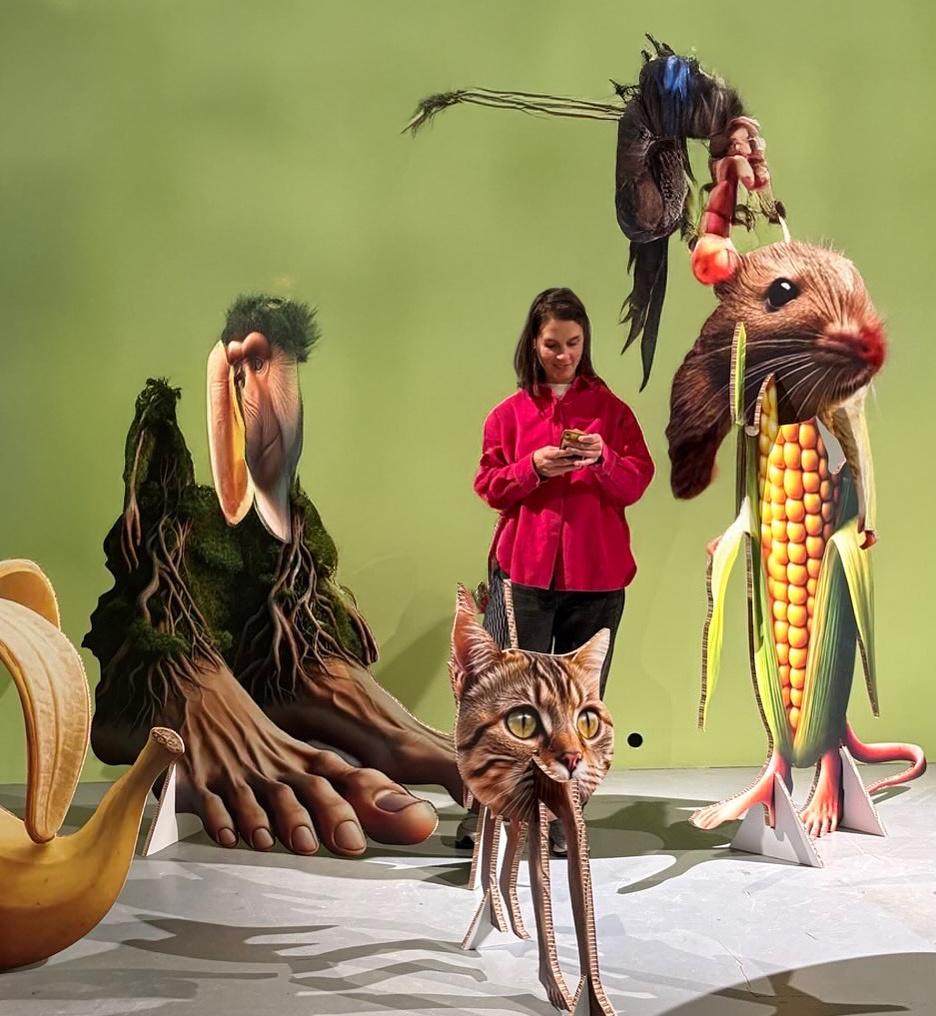
Becoming Brainrot workshop @ Digital Cosmos by Hartwig Foundation (fully booked)
Join us at Digital Cosmos for the Becoming Brainrot workshop. It offers a hopeful look at meme culture's future, reframing the rapid spread of absurd, AI-generated content not as mere 'slop,' but as an internet-native folklore. Inspired by its pushback against algorithmic efficiency, this session will explore how collective, AI-enabled world-building creates community through shared, emotional weirdness. Participants will move from critical reflection to hands-on practice, generating and physically assembling their own brainrot figures to collectively expand an emerging digital universe.
Digital Cosmos is a two-day forum at De Thomas, Amsterdam on 21–22 November 2025. The event will critically examine the role of art amid the rapid rise of artificial intelligence and its planetary transformation.
 Image by Susann Mielke from Pixabay
Hmm-ing in the Wild
Come find us at the following events!
◯ 13 Nov, Amsterdam, The Hmm's studio @ NDSM – Taking Out the Trash (part 1/4 of How to Archive Better: Preserving Practices workshop series with NADD)
◯ 20 Nov, Barcelona, IBTM – Presentation of our updated livestream platform, The Inbetween (more info soon!)
◯ 22 Nov, Amsterdam, De Thomas – Becoming Brainrot workshop @ Digital Cosmos by Hartwig Foundation (fully booked)
◯ 29 Nov, Brussels, deBuren – The making of the meme workshop @ Het is maar om te lachen
◯ 10 Dec, Middenmeer – Data Centre Tour for AMFI students (not open to public)
◯ 11 Dec, Rotterdam, Nieuwe Instituut & online – The Archive and the Audience with Avery Dame-Griff, Tommaso Campagna, Gijs de Heij (part 2/4 of How to Archive Better: Preserving Practices workshop series with NADD)
◯ 15 Jan 2026, Rotterdam, Nieuwe Instituut & online – The Materiality of Archiving, with Hackers & Designers and more (part 3/4 of How to Archive Better: Preserving Practices workshop series with NADD)
◯ 12 Feb 2026, Amsterdam, The Hmm's studio @ NDSM – Automated Archiving, with Linda Dounia, Martine Neddam, and more (part 4/4 of How to Archive Better: Preserving Practices workshop series with NADD)
Had a taste and want some more? The Hmm workshops and Prompt Battles are available to book here.
We hope you enjoyed this editorial newsletter! See you soon!
Visit your personal preferences page if you'd like to change how you receive this newsletter. Or, if you must, opt-out completely from all future mailings :-(